

Why Pasco County Homes Are Especially Vulnerable to Mold
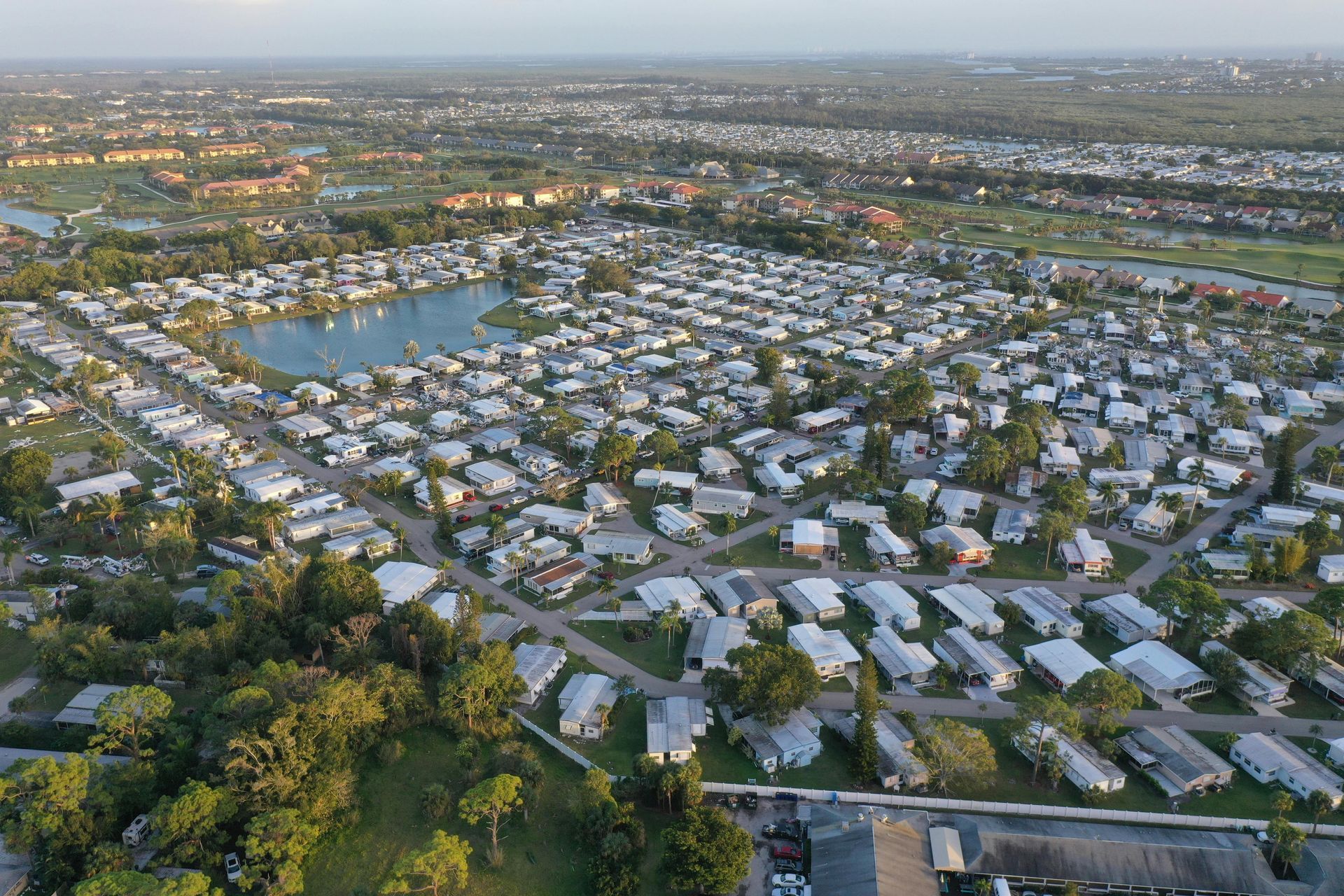
If you own or rent a home in Pasco County — whether in New Port Richey, Land O' Lakes, Zephyrhills, or Holiday — there's something you need to understand about mold that most homeowners only discover the hard way. This region is one of the most mold-vulnerable in the entire state of Florida, and the combination of aging housing stock, subtropical humidity, and persistent flooding has created conditions that allow mold to take hold faster here than almost anywhere else on the Gulf Coast.
At Spora Mold Remediation, we serve the New Port Richey community every single week. What we find again and again are homes that have been quietly harboring mold for months — sometimes years — before anyone notices. By the time the smell appears or someone starts getting sick, the problem is often far more extensive than it looks. This guide is written to help Pasco County homeowners understand the specific risk factors in this area and what to do before it reaches that point.
1. The Pasco County Housing Stock: Built for a Different Era
One of the most significant — and underappreciated — risk factors for mold in Pasco County is the age and construction type of its housing. A substantial portion of Pasco's residential inventory consists of manufactured homes and mobile homes built in the 1970s, 1980s, and 1990s. These structures were built before modern moisture-resistant materials, vapor barriers, and building codes designed to address Florida's climate became standard.
Manufactured homes present specific challenges when it comes to mold. Their wall cavities are thinner than site-built homes, which means less insulation buffer against temperature swings that cause condensation. Many older units have HVAC systems that run through the flooring or beneath the home — areas that are chronically exposed to ground moisture, humidity, and occasional flooding. When an HVAC line develops even a small leak, moisture can accumulate inside wall panels for weeks without any visible sign on the surface.
The floor systems in older manufactured homes are also a particular vulnerability. Particle board subfloors — common in pre-2000 construction — absorb water readily and begin supporting mold growth within 24 to 48 hours of exposure. Unlike concrete slab foundations common in newer site-built homes, the crawl-space underbelly of manufactured homes creates a humid, low-airflow environment that mold thrives in year-round. We've inspected homes in New Port Richey where the entire subfloor had to be replaced because mold had consumed it from below while the living surface above looked perfectly normal.
Even newer site-built homes in Pasco County aren't immune. Rapid development in Wesley Chapel, Zephyrhills, and Odessa over the past 20 years has produced neighborhoods where drainage infrastructure hasn't always kept pace with construction. Homes built on lots with poor grading regularly experience water intrusion at the foundation after heavy rain — a problem that compounds every storm season.
2. Florida's Humidity — And Why Pasco County Gets It Worse
Florida's humidity is well known, but Pasco County sits in a geographic sweet spot — or rather, a vulnerable spot — that makes its moisture levels particularly extreme. The county is flanked to the west by the Gulf of Mexico and threaded through by the Cotee River, Anclote River, and numerous drainage canals and retention ponds. This combination of coastal proximity and inland waterways means the ambient humidity in Pasco County regularly climbs above 80 percent for large portions of the year.
Mold doesn't need a water leak to grow. It needs humidity. When indoor relative humidity stays above 60 percent — which in Pasco County can happen even with the air conditioning running — mold can colonize surfaces without any visible moisture source. We regularly encounter mold growth on drywall, wood framing, and insulation in homes that have never had a plumbing leak or roof problem. The moisture simply came from the air, collecting on surfaces where airflow was limited: inside closets, behind furniture, inside wall cavities near exterior walls.
The rainy season in Pasco County runs roughly from June through October, and during this period the combination of warm temperatures and near-constant high humidity creates a sustained mold pressure that few homes can fully resist without proactive maintenance. Air conditioning units that are undersized, improperly maintained, or set too high allow indoor humidity to climb steadily. Every degree of temperature difference between the cooled indoor air and the warm outdoor air creates a new condensation opportunity on windows, pipes, and wall surfaces.
What makes Pasco County's situation distinct from coastal Pinellas or Hillsborough is the inland flooding dynamic. When the Cotee River floods — which has happened with increasing frequency — neighborhoods in New Port Richey, Port Richey, and Holiday experience standing water that can sit against home foundations for days. That sustained ground saturation drives moisture up through slabs and into wall systems in ways that simple rain cannot. We always see a surge in mold calls in the weeks following significant flooding events in this area, because that's exactly when the hidden mold growth that started during the flood finally becomes visible or smellable.
3. Storm Events and the Mold Clock That Starts Ticking
Pasco County's Gulf Coast exposure means it sits in the direct path of tropical storms and hurricanes tracking up the Gulf. Events like Tropical Storm Eta in 2020 and the remnants of Hurricane Ian in 2022 caused widespread flooding across the county, and the damage those storms left behind extended far beyond what was immediately visible. When a home takes on water — whether from a storm surge, roof damage, or flooding through a doorway — a biological clock starts immediately.
Mold colonization can begin on wet materials within 24 to 48 hours. This isn't an exaggeration or a sales pitch — it's documented by the EPA, FEMA, and the IICRC (Institute of Inspection, Cleaning and Restoration Certification), whose S520 standard governs the mold remediation work we perform. The organic materials in a home's structure — wood framing, drywall paper, carpet padding, ceiling tile, insulation — are all potential mold food when they stay wet long enough.
The challenge after a storm is that homeowners are dealing with multiple urgent problems simultaneously: roof damage, power outages, displaced families, insurance claims. Drying out wall cavities and removing water-damaged materials often falls to the bottom of the priority list. But 72 hours of wet drywall in a Florida August is often enough to establish mold growth that will require remediation rather than simple drying. Many of the worst mold jobs we handle in Pasco County are homes where water damage from a storm was addressed partially or cosmetically, and the mold grew silently inside the walls for the next six months.
4. Signs Pasco County Homeowners Should Never Ignore
Because so much mold growth in this region happens inside walls, under floors, and in HVAC systems where it can't be directly seen, knowing the secondary signs is critical. The most obvious warning sign is a persistent musty or earthy smell — particularly in rooms near exterior walls, bathrooms, laundry rooms, or anywhere near the HVAC system. This smell is caused by microbial volatile organic compounds (MVOCs) released by actively growing mold colonies, and it's detectable even when the mold itself is fully concealed.
Physical symptoms are another major indicator. If members of your household experience recurring respiratory irritation, unexplained allergy symptoms, headaches, or fatigue that improves when they leave the home, mold exposure should be considered. This is especially true for children and elderly residents, who are more sensitive to airborne spore concentrations. We've worked in New Port Richey homes where families had been suffering chronic symptoms for a year before connecting them to the mold we ultimately found in their HVAC ducts and bathroom walls.
Visible signs include discoloration on walls or ceilings — which may appear as dark spots, yellowish staining, or even paint that bubbles or peels without an obvious water source. Warped or soft flooring in manufactured homes is a serious warning sign, as is any floor that feels spongy underfoot, which can indicate the subfloor has absorbed enough moisture to support mold growth below the surface. Condensation on windows, walls, or pipes that appears regularly — not just on unusually humid days — suggests the indoor humidity is chronically elevated and mold growth is likely.
5. What Professional Mold Testing Actually Reveals
When homeowners call us, one of the most common questions is whether they really need professional testing or whether they can just look for visible mold and clean it themselves. The honest answer is that in Pasco County, given the housing stock and climate factors described above, visible surface mold is almost always the smaller part of the problem. Professional air sampling and surface testing reveal what's happening inside the structure — and in this region, what's inside the structure is usually more significant than what's on the surface.
Our mold assessments follow Florida's licensed mold assessor standards (License MRSA5106) and include air quality sampling using spore trap cassettes, which capture airborne spore concentrations and identify the specific species present. Different mold species carry different health implications and remediation requirements. Stachybotrys chartarum — commonly called black mold — requires very different handling than Cladosporium or Penicillium, which are far more common in Florida homes. Without laboratory analysis, there's no way to know which species are present or how extensive the colonization is.
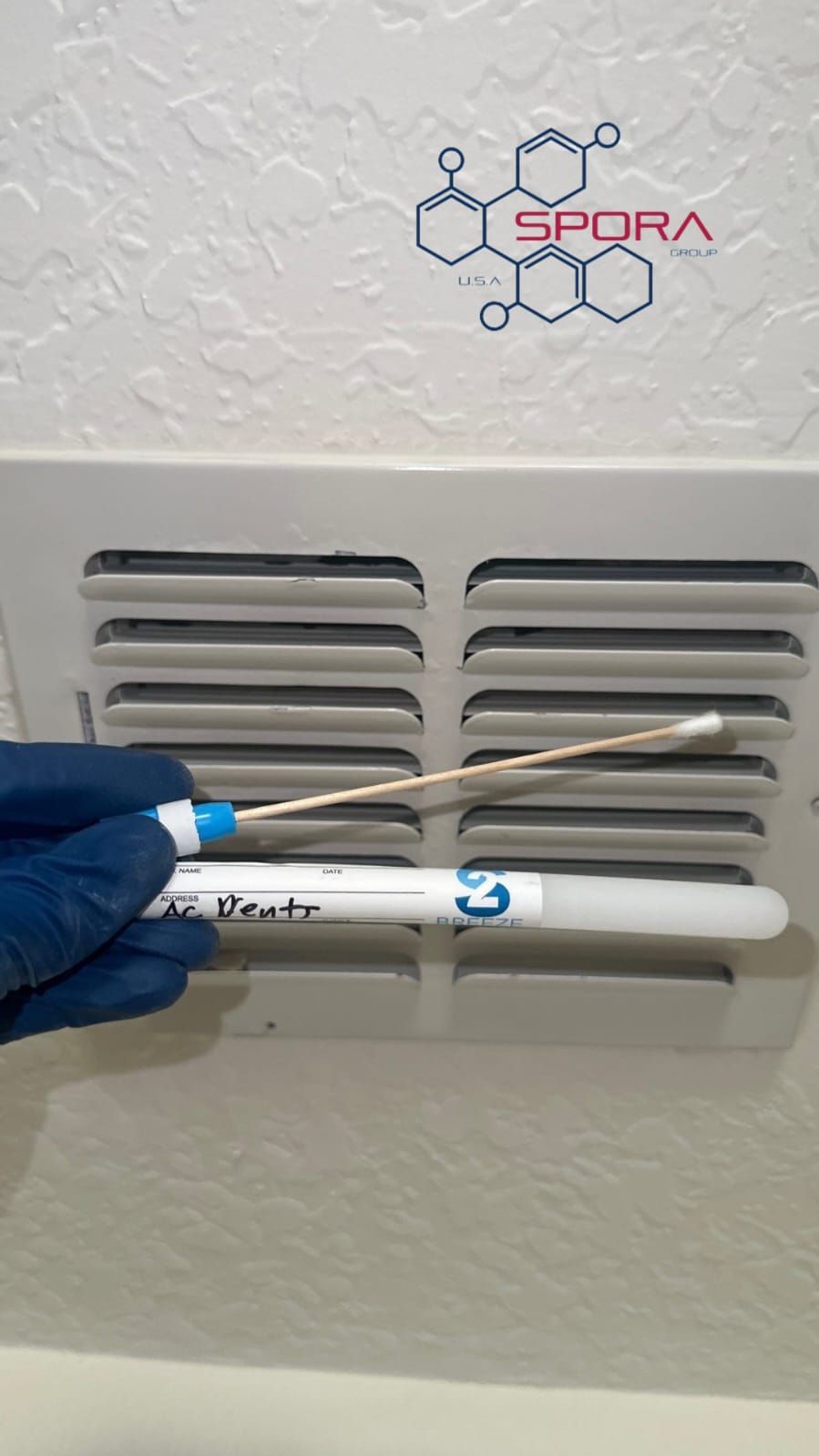
Surface sampling via tape lifts or swab tests allows us to confirm mold presence on materials that may appear stained or discolored but aren't clearly identifiable by sight. Moisture mapping, using professional-grade meters and thermal imaging cameras, maps the full extent of moisture intrusion behind walls and under floors — revealing exactly which areas are at active risk for mold growth even if the mold hasn't fully established yet. In Pasco County manufactured homes, this moisture mapping step routinely reveals problem areas that aren't visible from the living space at all.
Conclusion: Don't Wait for Mold to Find You
Pasco County homeowners face a genuine and specific set of risk factors — aging manufactured homes, persistent high humidity, regular flooding, and Gulf Coast storm exposure — that make proactive mold awareness more important here than in most parts of the country. The good news is that mold caught early is dramatically less expensive and disruptive to remediate than mold discovered after months of hidden growth.
Spora Mold Remediation's New Port Richey office serves all of Pasco County with licensed mold assessors and certified remediators. Whether you've recently experienced flooding, you've noticed a smell you can't identify, or you simply want peace of mind about your home's air quality, a professional assessment is the right starting point. Call us at (727) 238-5152 or visit our New Port Richey office at 5832 Portal Rd to schedule your inspection. Don't wait for the problem to find you — find it first.
David Durso is a Florida-licensed mold assessor and remediator with years of hands-on experience protecting homes across Pasco, Pinellas, and Hillsborough Counties. He co-founded Spora LLC to bring certified, science-based mold assessment and remediation to Tampa Bay homeowners.