What Is Mold? The Science Behind Why It Grows in Port St. Lucie Homes
If you live in Port St. Lucie or anywhere along Florida's Treasure Coast, you already know that humidity here isn't just uncomfortable — it's relentless. The same subtropical climate that makes St. Lucie County one of Florida's fastest-growing communities also makes it one of the most mold-prone environments in the entire country. Mold doesn't care whether your home was built last year or three decades ago. It doesn't care how clean you keep your house. Given the right conditions, it will find a way in, establish itself, and spread — often long before you ever see a single dark spot on your wall.
Understanding what mold actually is, how it grows, and why Port St. Lucie homes are particularly vulnerable isn't just interesting science — it's the kind of knowledge that protects your property, your health, and your family. At Spora Mold Remediation, our licensed mold assessors and remediators have inspected hundreds of Treasure Coast properties. What we've learned consistently is this: the homeowners who catch mold problems early are the ones who understand how mold works.
This guide covers the biology of mold, the exact conditions that allow it to thrive, the lifecycle from invisible spore to visible colony, and the specific reasons why homes in Port St. Lucie, Vero Beach, Stuart, and across St. Lucie and Martin counties face elevated risk year-round. By the end, you'll know exactly what to look for — and when to call a professional.
1. What Is Mold? The Biology Behind the Problem
Mold is not a plant, not a bacteria, and not a virus. It belongs to the kingdom Fungi — the same biological family as mushrooms and yeasts. The key difference between mold and the fungi you recognize is how it grows: mold spreads across surfaces through a network of microscopic thread-like structures called hyphae. These hyphae branch and connect to form a larger mass called mycelium, which is the living body of the mold colony. The fuzzy or discolored patches you see on walls, grout, or ceiling tiles are mycelium — the colony has already been growing, invisibly, for days or weeks before it becomes visible to the naked eye.
There are over 100,000 identified species of mold worldwide, but in Florida homes, a handful of species account for the vast majority of indoor growth. Cladosporium is one of the most common — it appears as a dark greenish-black stain on fabric, wood, or painted surfaces, and it thrives in the mild humidity that Florida experiences even in its driest months. Aspergillus is a frequent offender known for colonizing HVAC systems and air conditioning ducts where condensation accumulates. Penicillium grows rapidly on water-damaged building materials, producing the musty smell many Florida homeowners associate with "old house odor." And Stachybotrys chartarum — the infamous black mold — grows more slowly but produces mycotoxins that pose serious health risks, typically appearing in areas with significant sustained water damage.
What all of these species share is that their reproductive units — spores — are already present in the outdoor air everywhere, including right now in Port St. Lucie. Mold spores are microscopic, lightweight, and designed by evolution to travel. Every time you open a window or door, spores enter your home. This is normal and unavoidable. What determines whether those spores remain harmless or whether they germinate and grow into a colony is entirely about conditions — specifically moisture, temperature, and available food sources.
This is a critical point: mold doesn't invade your home as a discrete event. It is always present at low levels, waiting for conditions to shift in its favor. The goal of mold management — and the reason professional assessment matters so much in Florida — is controlling those conditions before spores get the foothold they need to multiply into a health and structural hazard.
2. What Mold Needs to Grow — The Four Requirements
Understanding what mold needs to survive makes it much easier to identify why certain areas of your home are high risk, and why Port St. Lucie's climate creates such challenging conditions year-round. Mold requires four things to grow: moisture, a food source, warmth, and oxygen . In most environments, oxygen and warmth are never limiting factors. The critical variables are moisture and food — and Florida's climate delivers both in abundance.
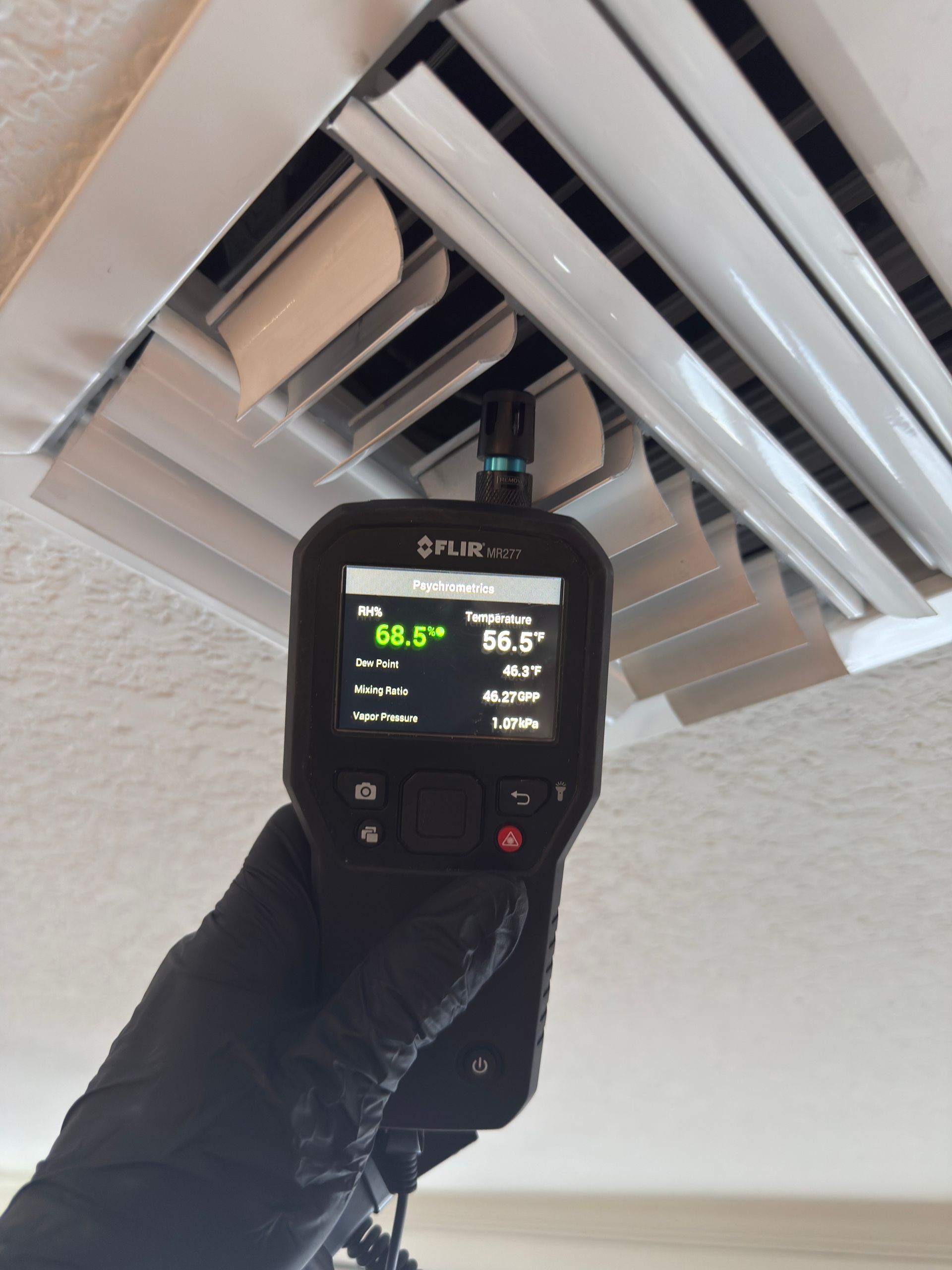
Moisture is by far the most important factor. Mold cannot germinate without it. Specifically, mold needs a relative humidity of 60% or higher, or direct contact with wet or damp material. Port St. Lucie's average outdoor relative humidity hovers between 70% and 85% for most of the year, with summer months — June through September — regularly pushing outdoor humidity above 90%. When that outdoor air enters your home and contacts surfaces even slightly cooler than the dew point, condensation forms. This condensation — in amounts too small to see — is often enough to trigger mold germination on the right surfaces.
The food source requirement surprises many homeowners. Mold doesn't need soil or fertilizer — it feeds on organic material, and modern home construction is essentially a buffet for mold species. Drywall is one of the most mold-friendly building materials in common use: the paper facing on gypsum board provides exactly the cellulose-based organic material that Stachybotrys and Penicillium thrive on. Dimensional lumber, OSB subfloor panels, carpet backing, ceiling tiles, and even the dust that accumulates on painted surfaces all serve as food sources for different mold species. In a typical Port St. Lucie home, mold has access to food sources throughout the entire structure.
Temperature is the third factor, and Florida effectively eliminates it as a limiting variable. Most mold species grow actively between 40°F and 100°F — a range that Florida's year-round temperatures sit comfortably within. While extreme cold slows mold growth, it doesn't kill established colonies. In Port St. Lucie, where temperatures rarely fall below 50°F even in January, mold faces no meaningful cold-season slowdown. It grows year-round.
Oxygen completes the list, and indoor spaces are fully saturated with it. What this means practically is that moisture control is the only lever available to Treasure Coast homeowners . Temperature, oxygen, and food sources are all present and unchangeable. Every mold prevention strategy — proper ventilation, dehumidification, prompt water damage response, HVAC maintenance — is ultimately about controlling the one variable that can be managed.
3. Why Port St. Lucie Is Among Florida's Highest-Risk Areas for Mold
Port St. Lucie and the broader Treasure Coast region face a convergence of factors that make mold management particularly challenging. It's not just that Florida is humid — it's that St. Lucie County's specific geography, development patterns, and building stock create conditions that amplify mold risk compared to other parts of the state.
The Treasure Coast sits at the interface of the Gulf Stream's warm Atlantic waters and Florida's subtropical interior. This geographic position means the area receives significant moisture from two directions: onshore breezes from the Atlantic and storm systems that track up the Florida peninsula. The St. Lucie River system and the C-44 canal, which connects Lake Okeechobee to the St. Lucie Estuary, creates additional localized humidity during summer months. Homes within several miles of any water body in St. Lucie or Martin County experience measurably higher average indoor humidity — a difference that matters significantly for mold risk.
Port St. Lucie's rapid development over the past two decades has also contributed to mold risk in ways that aren't immediately obvious. Much of the construction during the 2000s housing boom — and the more recent wave of development in communities like Tradition and PGA Village — used materials that can trap moisture during construction. If framing lumber or sheathing panels get wet during a rainy build season and are enclosed before fully drying, the result is a home with mold already established inside its walls before the first homeowner moves in. Our inspection team has documented this scenario in Port St. Lucie homes less than three years old.
Hurricane season creates another layer of risk unique to South Florida. Even tropical storms that don't make direct landfall can dump several inches of rain in hours, overwhelming drainage systems, driving water under doors, and saturating soil against foundations. The aftermath of a single significant rain event can create dozens of hidden moisture pockets inside a home that persist for weeks if not professionally addressed. Given that mold can begin colonizing damp material within 24 to 48 hours, the response window after water intrusion is a genuine biological threshold — not marketing language.
4. Where Mold Hides in Treasure Coast Homes
One of the most persistent and dangerous misconceptions about mold is that you'll see it before it becomes a serious problem. In reality, the colonies that cause the most structural damage and pose the greatest health risk are the ones you cannot see. Our inspection team routinely finds significant mold growth in locations that showed no visible signs — areas that homeowners had no way to inspect without professional thermal imaging and moisture detection equipment.
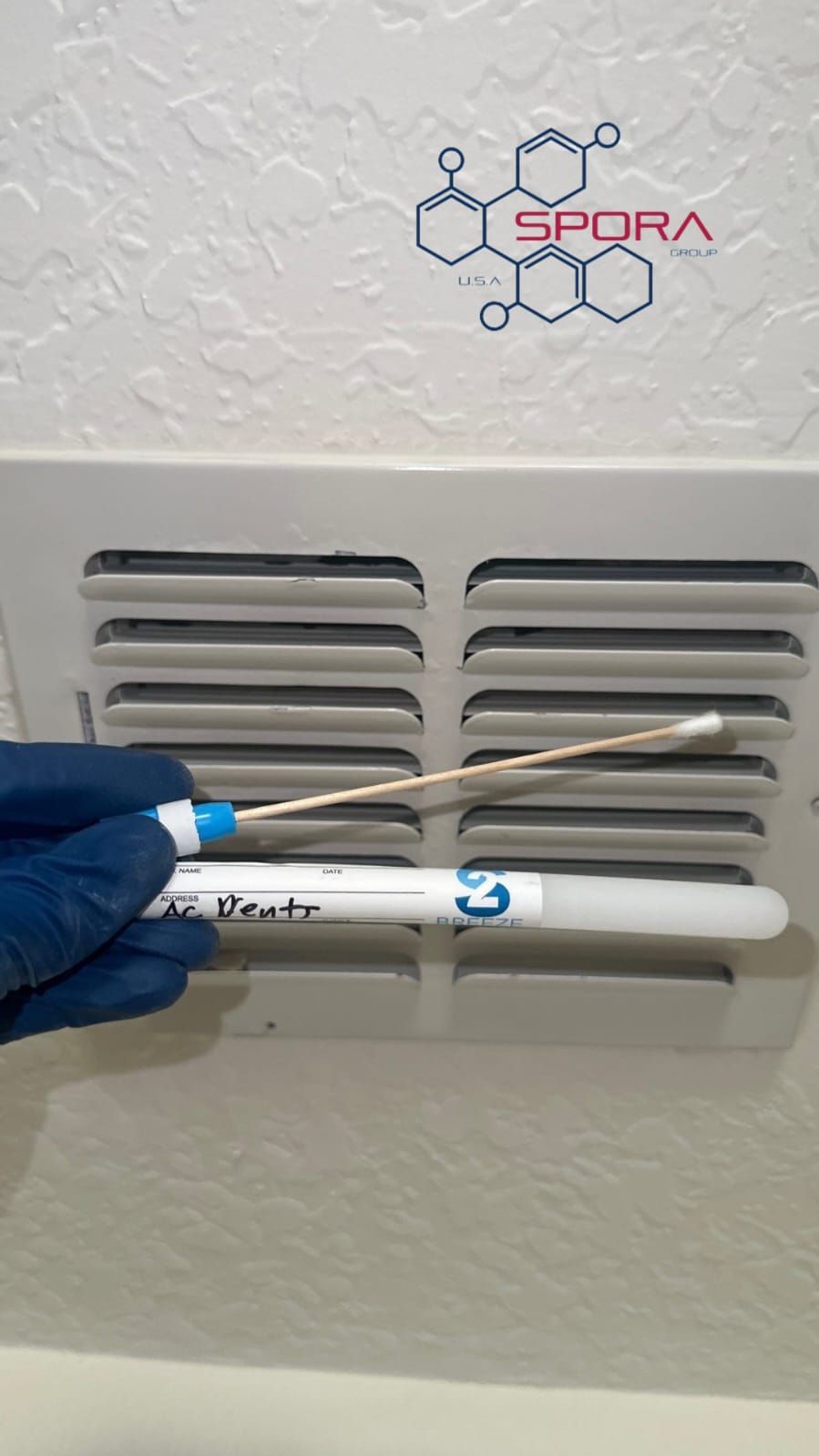
HVAC systems are the single most important vector for mold distribution in Treasure Coast homes. Your air conditioning system runs for a significant portion of every day in Port St. Lucie — often 8 to 12 hours daily during summer. During each cooling cycle, warm humid air passes over the evaporator coils, where it cools below the dew point, causing moisture to condense. This condensation collects in the drip pan and drains through a condensate line. If that line becomes clogged — which happens frequently in Florida due to algae growth — water backs up, overflows the pan, and saturates the air handler cabinet, nearby insulation, and surrounding structural materials. Simultaneously, mold spores settle on the damp coils and ductwork and begin colonizing, eventually dispersing spores to every room in the house every time the system runs.
Interior wall cavities are another major problem area. Exterior walls that face prevailing southeast breezes can develop moisture infiltration through microscopic gaps in stucco, around window and door frames, or through roof overhangs during driving rain. This moisture saturates the paper face of interior drywall and the wooden studs behind it — both excellent mold food sources. Because wall cavities have limited ventilation, moisture lingers long after a rain event, and mold colonies can grow to substantial sizes without any visible indication on the finished wall surface. A musty smell in a specific room or corner is often the first and only external clue that a wall cavity harbors active growth.
Attic spaces deserve special attention in any Florida home. Poor ventilation, aging roofing, or a single storm event that shifts flashing can allow moisture into an attic that becomes a contained, humid, warm environment — ideal for mold. Attic mold often affects the underside of roof sheathing and tops of ceiling joists, and can be extensive before affecting living spaces below. The difference between what homeowners expect (a small isolated patch) and what our thermal imaging reveals (coverage across significant portions of sheathing) is consistently striking. Bathrooms, kitchens, and under-sink areas round out the highest-risk zones — not for the surface mold visible on grout or caulk, but for the colonies growing behind tile, under vanities, and inside wall cavities where slow plumbing leaks have fed moisture for months.
5. The Mold Life Cycle — From Invisible Spore to Visible Colony
Understanding how quickly mold progresses from initial spore contact to a visible, spreading colony explains why prompt response to water damage is critical — and why waiting to see if a problem "goes away on its own" is a strategy that consistently produces worse outcomes and higher remediation costs.
The mold life cycle begins with germination. When a mold spore lands on a surface with adequate moisture — relative humidity at or above 60%, or a wet surface — it begins absorbing water. Within 24 to 48 hours under favorable conditions, the spore germinates, sending out the first microscopic hyphae that begin absorbing nutrients from the surrounding organic material. At this stage, the colony is completely invisible — no color, no texture, no odor. There is no way to detect a germinating spore without laboratory analysis of an air or surface sample.
Over the following days, the hyphal network expands through the material as the colony extracts nutrients and grows. By day 3 to 7, depending on species and conditions, the colony begins producing the visible mycelium mat that most people recognize as mold. This is when the fuzzy or powdery appearance develops — and when many species begin producing the volatile organic compounds (VOCs) that create the musty odor associated with mold problems. Critically, the colony has been actively growing and consuming structural material for several days before it becomes visible to the eye.
Mature colonies reproduce by producing millions of new spores, released into the surrounding air and distributed throughout the home via air currents and the HVAC system. A single established colony in a wall cavity can seed secondary colonies in multiple rooms within days. This exponential growth dynamic — invisible germination, rapid colony establishment, mass spore production, new colony seeding — explains why mold problems ignored for weeks or months are almost always far more extensive than their initial visual presentation suggests.
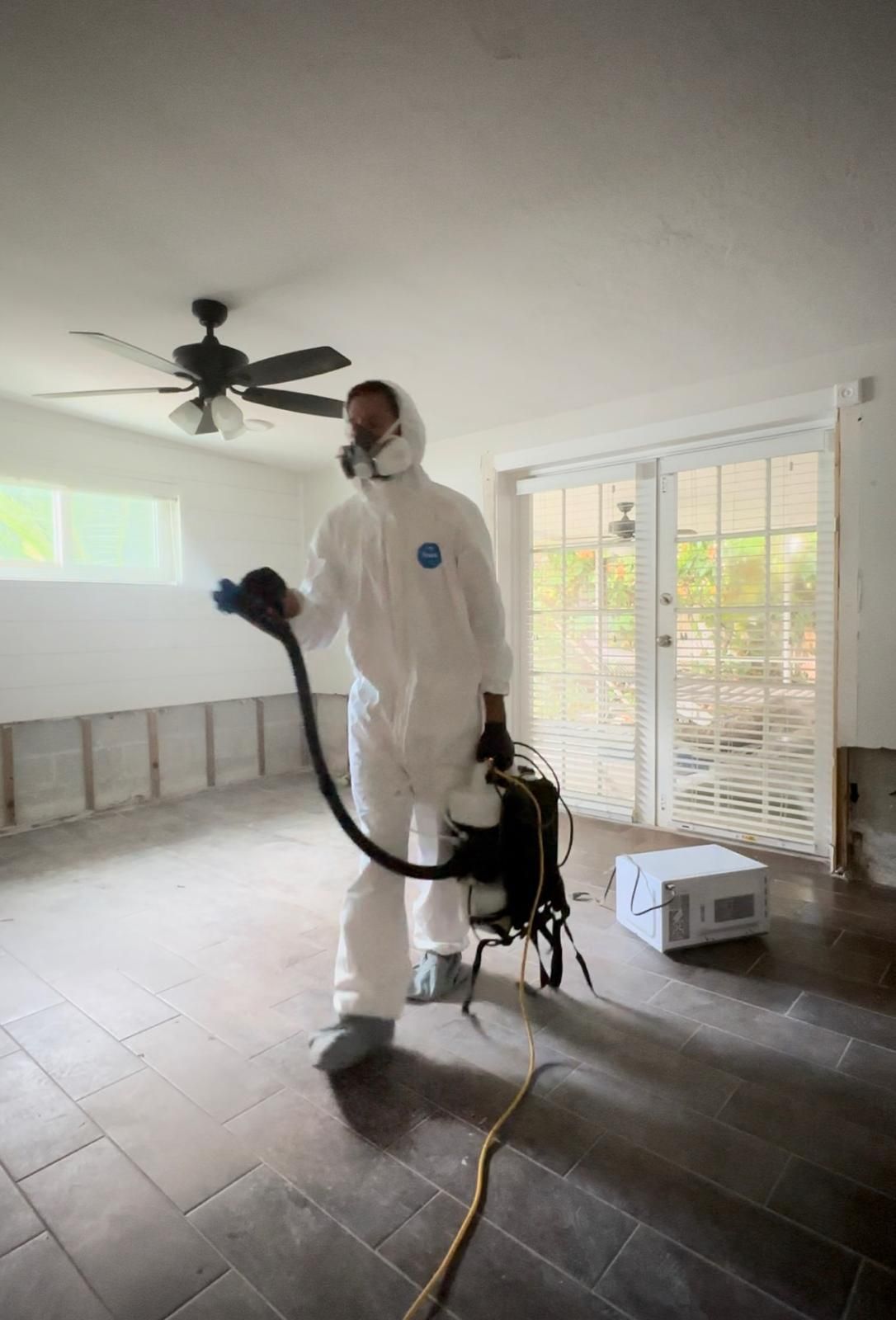
6. Health Effects of Mold Exposure
The health effects of mold exposure vary significantly based on the species involved, the level of exposure, and the individual's health status and sensitivity. Understanding this spectrum helps explain why two people in the same household can have very different experiences — and why some residents of mold-affected homes feel chronically ill while others appear unaffected.
The most common health effects are respiratory. Mold spores, when inhaled, can trigger allergic reactions in sensitized individuals, causing symptoms that closely resemble seasonal allergies: sneezing, runny nose, itchy or watery eyes, nasal congestion, and coughing. For people with asthma, mold exposure can trigger acute attacks. The insidious quality of indoor mold exposure — unlike seasonal outdoor pollen — is that it doesn't end. Homeowners describe months of allergy-like symptoms that doctors treat as conventional allergies, unaware that the source is a colony inside their own home. A telling sign: symptoms improve or disappear entirely when the affected person spends time away from home and return when they come back.
Certain mold species produce mycotoxins — chemical compounds toxic to humans and animals. Stachybotrys chartarum is most commonly associated with mycotoxin production, though some Aspergillus and Penicillium strains can also produce toxic compounds. Mycotoxin exposure has been associated with chronic fatigue, neurological effects, persistent headache, and with prolonged significant exposure, more serious health consequences. Importantly, not all black-colored mold is Stachybotrys — and not all Stachybotrys is producing mycotoxins at any given time. This is why laboratory analysis is far more informative than visual identification alone.
Vulnerable populations face greater risk from mold exposure at lower levels. Infants and young children , whose immune and respiratory systems are still developing, are particularly susceptible. Elderly individuals with compromised lung function, and anyone undergoing immunosuppressive treatment, face elevated risk of serious infection from mold species that are typically harmless to healthy adults. If your Port St. Lucie household includes vulnerable individuals and you have any reason to suspect a mold problem, professional assessment should be treated as a health matter — not merely a maintenance issue.
7. Warning Signs Your Treasure Coast Home Has a Mold Problem
Given how much of mold's growth cycle occurs invisibly, knowing what observable signs to watch for is essential. These are the indicators that most reliably correlate with active mold growth in a home, based on our experience inspecting properties across Port St. Lucie, Stuart, Vero Beach, and the surrounding Treasure Coast region.
A persistent musty odor is the most reliable early warning sign, and it should never be dismissed or masked with air freshener. Mold produces volatile organic compounds as a metabolic byproduct — these compounds create a distinctive earthy, damp, or stale smell that is detectable at concentrations well below what's visible. If a room, closet, or area of your home smells musty even after cleaning, that odor is almost certainly coming from an active mold colony nearby, even if you cannot see any growth.
Visible discoloration on walls, ceilings, grout, or other surfaces — in any color including white, gray, green, brown, or black — should be taken seriously. Mold is not always dark. Some species present as white powdery growth, others as yellow or pink staining. Any unexplained discoloration in an area that is or has been exposed to moisture warrants professional evaluation, not just surface cleaning with household products. Surface cleaning addresses only visible growth — it does not eliminate the colony behind the surface.
Recent water damage of any kind — roof leak, appliance failure, plumbing leak, or storm flooding — is a strong predictor of subsequent mold growth if not professionally addressed within the 48-hour window. If your Port St. Lucie home has had any water intrusion event in the past 12 months, regardless of whether you believe it was fully cleaned up, mold assessment is a worthwhile investment. Unexplained health symptoms — particularly respiratory issues, sinus congestion, or headaches that improve when you leave home — complete the picture of a household that warrants professional mold testing.
The Next Step: Professional Mold Assessment for Your Port St. Lucie Home
Mold is a biological certainty in Port St. Lucie. The spores are always present, the climate is always warm, and every home contains organic material available as a food source. What determines whether those spores become a health problem or a structural crisis is moisture — and whether you catch issues early enough to act before they compound into a larger remediation project.
If you've noticed any of the warning signs described in this guide — a persistent musty smell, unexplained health symptoms, visible discoloration, or a recent water event — the most important next step is a professional mold assessment with certified air and surface sampling and independent laboratory analysis. At Spora Mold Remediation, our licensed mold assessors (Florida License MRSA5106) serve Port St. Lucie, Vero Beach, Stuart, and all of St. Lucie, Martin, and Indian River counties. Results are typically delivered next business day. Call us at (772) 202-0209 or book an appointment online — we'll tell you exactly what's in your home, and what to do about it.