

Mold in Your Air Ducts: Warning Signs, Health Risks, and How to Fix It
Most homeowners think about mold growing on walls, under sinks, or in damp basements. But some of the worst mold problems in Florida homes are hidden inside the one system that touches every room in your house — your HVAC ductwork. When mold colonizes your air ducts, every time your AC kicks on, it pushes mold spores into every room, every breath, all day long.
In the Tampa Bay area, the combination of year-round humidity, constant AC usage, and aging duct systems creates ideal conditions for duct mold growth. At Spora Mold Remediation, ductwork mold is one of the most common issues we find during inspections — and one of the most misunderstood by homeowners who have been breathing contaminated air for months without realizing it.
1. Why Florida Air Ducts Are Especially Vulnerable to Mold
Your air conditioning system creates temperature differentials that generate condensation. When warm, humid Florida air meets the cold surface of supply ducts, moisture forms on the interior duct walls. In a well-maintained system, this moisture drains away or evaporates quickly. But in older systems, systems with poor insulation, or systems that run continuously during our humid summers, that moisture lingers long enough for mold to establish itself.
The problem compounds over time. Dust, dead skin cells, and organic debris naturally accumulate inside ductwork. This debris becomes food for mold colonies once moisture is present. Flex duct — the ribbed, flexible ductwork used in most Florida homes — is particularly susceptible because its ridged interior surface traps more debris and holds moisture longer than smooth metal ductwork. The insulation layer surrounding flex duct can also absorb moisture and become a hidden reservoir for mold growth that you will never see from outside the duct.
Add to this the reality that most Florida homes run their AC systems 10 to 14 hours per day during summer months. Every cycle pulls in air — along with any humidity, dust, or spores present in the home — and pushes it through the duct system. If a mold colony exists anywhere in the ductwork, each cycle distributes spores throughout the entire home. A single contaminated section of duct can affect air quality in every room connected to that system.
2. Warning Signs of Mold in Your Ductwork
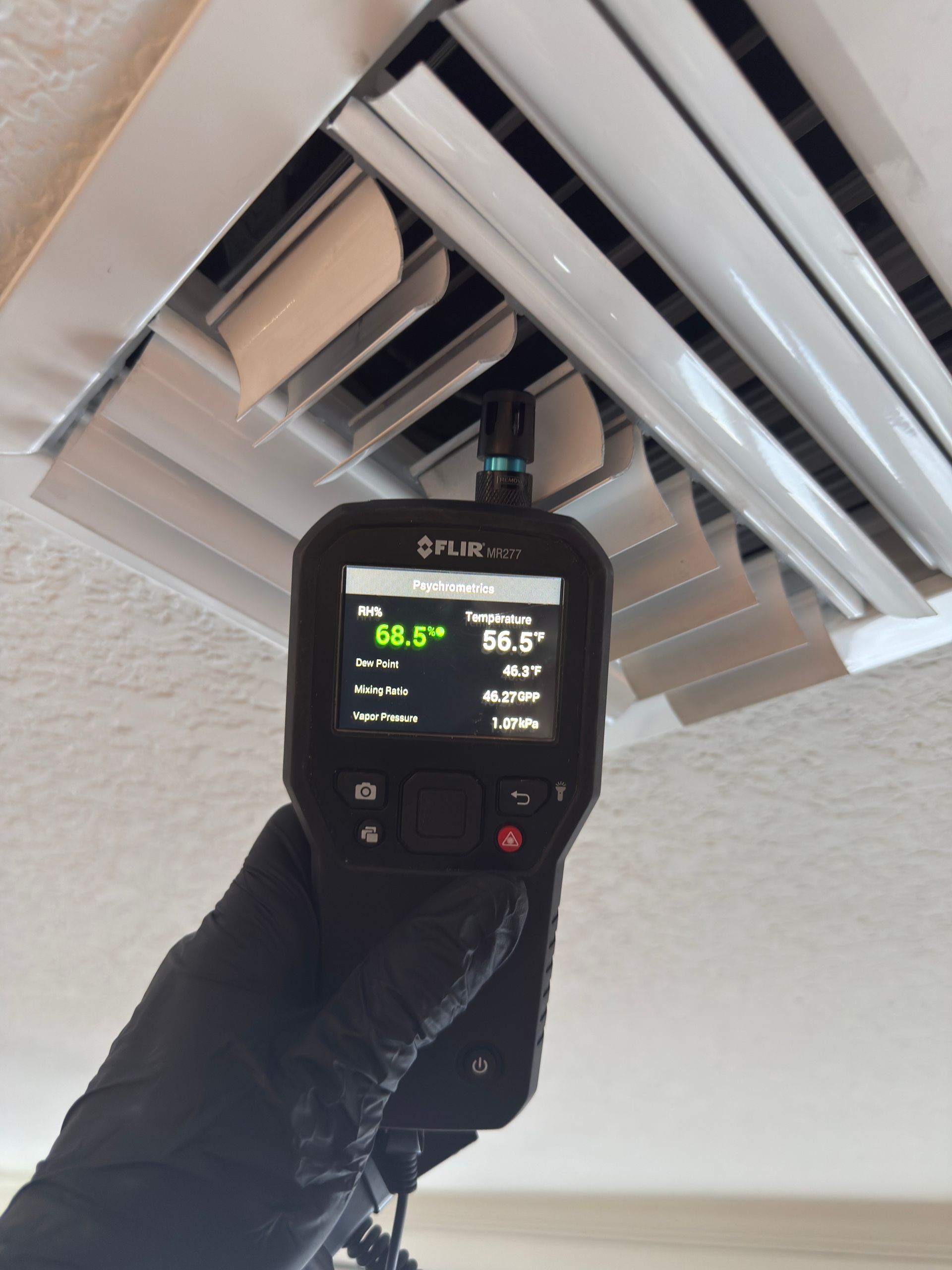
Duct mold is invisible from your normal vantage point. You cannot see inside your ducts without specialized equipment, and the mold often grows deep within the system where it is protected from light and airflow. However, there are reliable warning signs that suggest mold contamination in your HVAC system.
A persistent musty or stale odor when the AC runs is the most common indicator. If the smell appears or intensifies when the system activates and fades when it shuts off, the source is almost certainly inside the ductwork or air handler. Many homeowners become desensitized to this smell over time and only notice it when they return home after being away for several days. If visitors comment on a musty smell that you no longer notice, take that seriously.
Visible mold around vent registers is another clear sign. Dark spots, discoloration, or fuzzy growth on or around the supply registers — the vents where cold air enters your rooms — indicates that mold is growing inside the duct and being pushed toward the vent opening. Sometimes you will see dark streaking on the ceiling or wall immediately surrounding a vent, caused by mold spores depositing on surfaces as air exits the register.
Unexplained health symptoms among household members frequently point to duct mold. If multiple people in the home experience recurring sinus infections, persistent coughing, nasal congestion, eye irritation, throat irritation, or worsening allergy and asthma symptoms — especially if symptoms improve when they leave the home and return when they come back — indoor air quality should be investigated. Children, elderly family members, and anyone with compromised immune systems are particularly vulnerable to airborne mold exposure.
3. Why Standard Duct Cleaning Is Not Enough
When homeowners discover mold in their ducts, the first call is often to a duct cleaning company. Standard duct cleaning uses brushes, compressed air, and vacuum systems to remove loose debris from inside ductwork. For dust and normal buildup, this is adequate. For active mold contamination, it is not.
Mold does not just sit on the surface of duct material — it penetrates into porous surfaces and establishes root structures called hyphae. On flex duct, mold grows into the insulation layer and the inner liner material. Brushing and vacuuming removes surface spores but leaves the root structure intact. Within days to weeks, the colony regrows from the surviving hyphae, and you are back to the same problem. You have paid for a service that provided temporary cosmetic improvement while the actual contamination continues.
Additionally, aggressive duct cleaning on mold-contaminated ducts can actually make the problem worse in the short term. Disturbing an active mold colony without proper containment sends a massive burst of spores into the air throughout your home. Without HEPA filtration and negative air pressure containment — equipment that standard duct cleaners do not carry — a cleaning attempt can cause a significant spike in airborne spore counts that takes days to settle.
Professional mold remediation in ductwork follows a fundamentally different approach. At Spora, we begin with air quality testing to establish baseline spore counts before any work begins. Contaminated duct sections are isolated using containment barriers. HEPA-filtered negative air machines create directional airflow that prevents cross-contamination. Damaged or heavily contaminated duct sections are removed and replaced rather than cleaned. The system is treated with EPA-registered antimicrobial products designed for HVAC applications. Post-remediation air quality testing confirms that spore counts have returned to acceptable levels before we consider the job complete.
4. The Professional Inspection Process
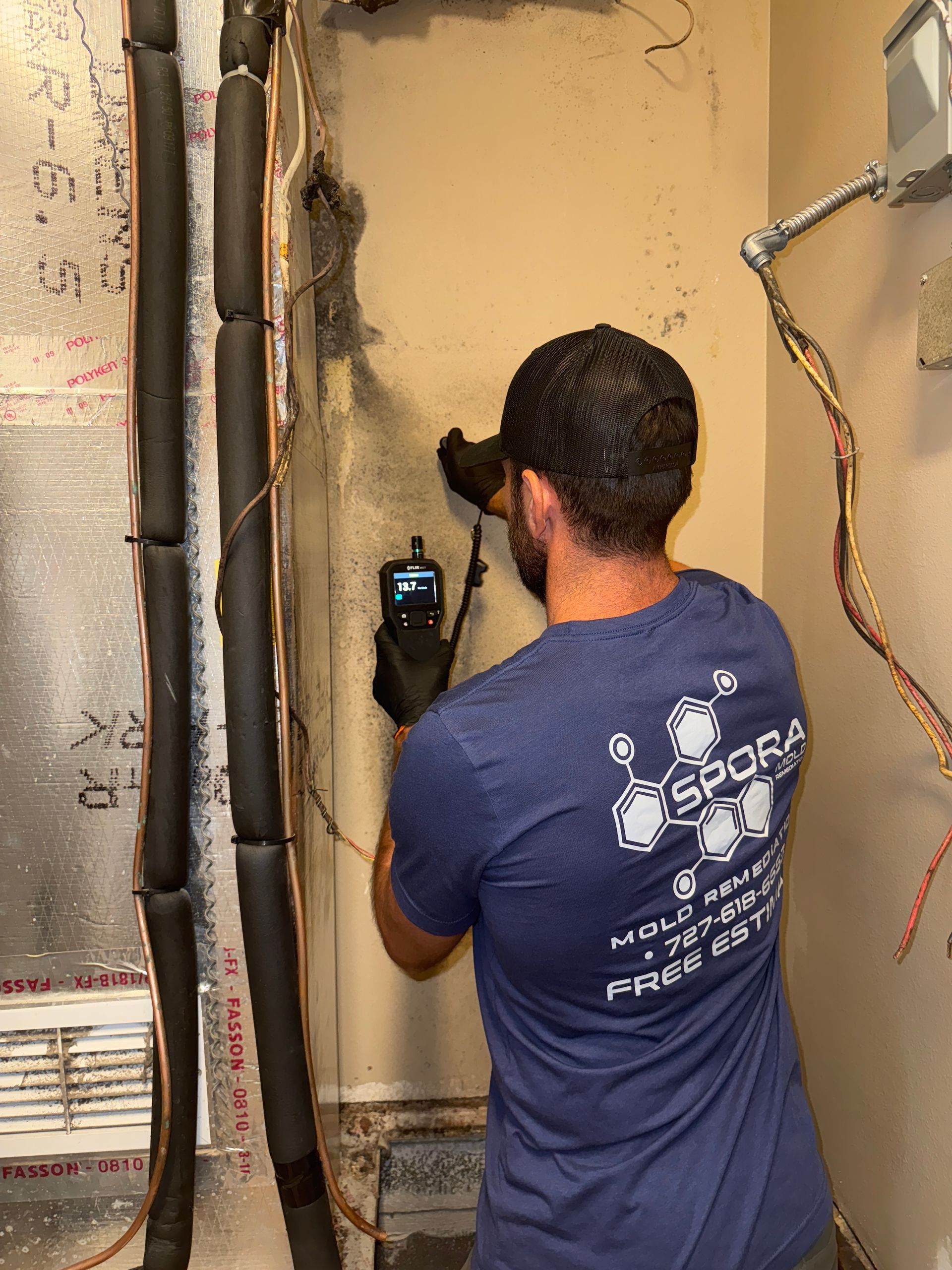
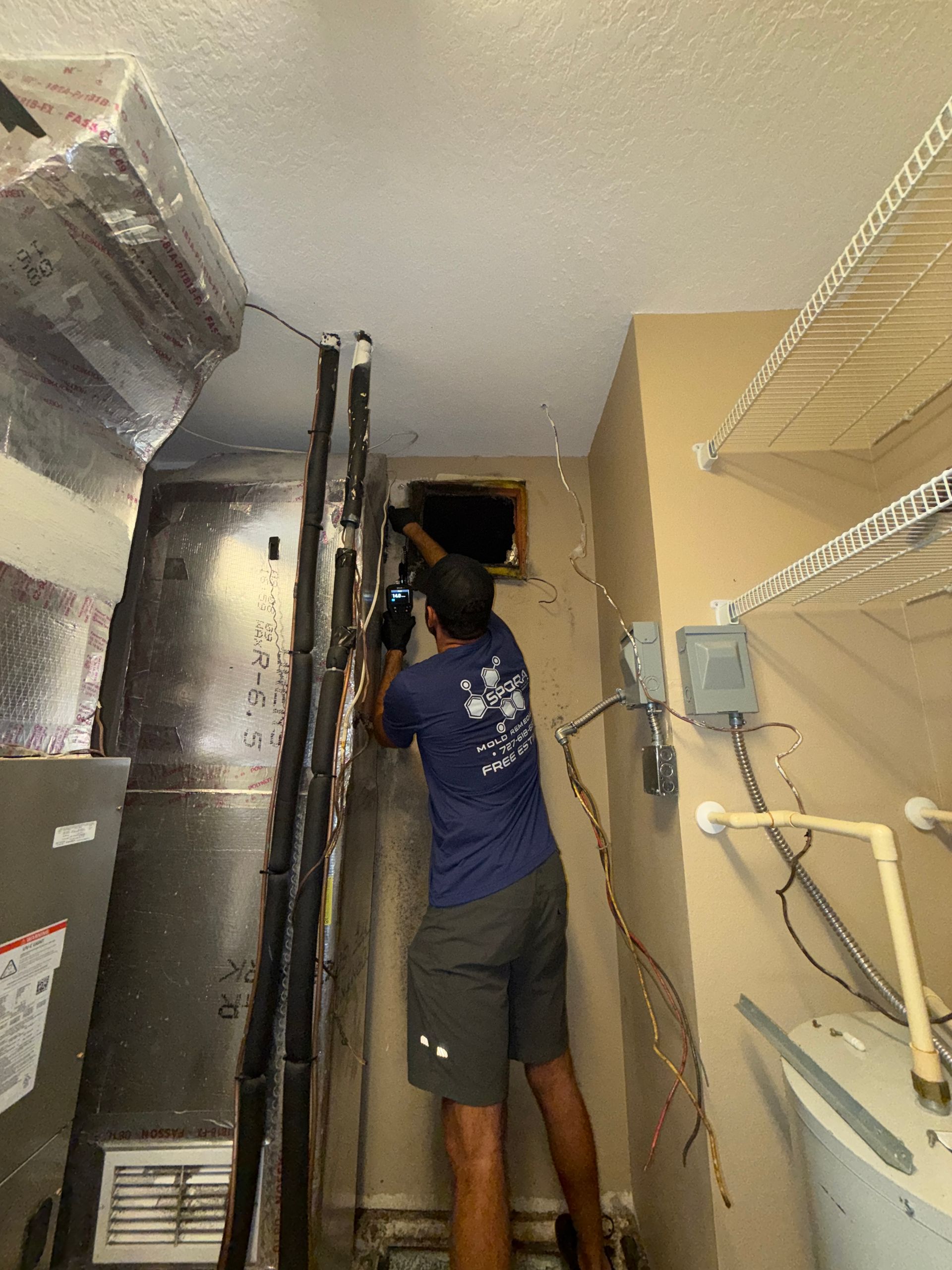
A proper duct mold assessment starts with a visual and instrument-based inspection that goes far beyond looking at your vent registers. Our technicians use fiber optic inspection cameras that enter the ductwork through register openings and access panels to visually document the interior condition of both supply and return ducts throughout the system.
Moisture mapping with professional-grade meters identifies areas where elevated moisture levels create conditions favorable for mold growth. Thermal imaging cameras reveal temperature anomalies in ductwork that indicate insulation failures, condensation points, or areas where exterior humidity is infiltrating the system. These tools allow us to find problems that are completely invisible to the naked eye, and they produce documented evidence that can be shared with your insurance company if a claim is warranted.
Air quality sampling is the definitive test. We collect air samples from inside the ductwork, from the living spaces served by the HVAC system, and from outside the home to establish a baseline comparison. These samples are analyzed by an independent, accredited laboratory that identifies mold species present and quantifies spore concentrations. The lab report tells us exactly what you are breathing, how much of it there is, and whether the concentrations exceed acceptable indoor levels.
This data-driven approach means there is never any guesswork about whether you have a problem, how severe it is, or whether the remediation was successful. Every step is documented and verifiable.
5. Preventing Mold From Coming Back
Remediation solves the immediate problem, but prevention keeps it from returning. After completing duct mold remediation, we work with homeowners to address the conditions that allowed mold growth in the first place.
Maintaining indoor humidity below 60 percent is critical. In Florida, this means your AC system needs to be properly sized and functioning efficiently. An oversized system cools the air too quickly without running long enough to remove humidity — a common issue in Tampa Bay homes where units have been replaced without proper load calculations. A whole-home dehumidifier, installed in-line with your HVAC system, can be a worthwhile investment for homes that consistently struggle with humidity control.
Regular HVAC maintenance matters more than most homeowners realize. Changing filters on schedule, keeping the drain pan clean and draining freely, ensuring the condensate line is clear, and having the system professionally serviced annually all reduce the conditions that promote duct mold. A clogged condensate drain is one of the single most common causes of HVAC-related mold problems in Florida homes — it causes water to back up into the air handler, creating a moisture source directly upstream of your entire duct system.
UV light systems installed in the air handler provide ongoing protection against biological growth. These systems expose air passing through the handler to ultraviolet light that damages mold spores, bacteria, and viruses, significantly reducing the biological load entering your ductwork. While not a substitute for proper maintenance and humidity control, UV systems add a meaningful layer of protection for Florida homes.
If your Tampa Bay home has a musty smell when the AC runs, visible mold near vents, or household members with unexplained respiratory symptoms, your ductwork needs professional inspection. Call Spora Mold Remediation at (727) 618-6653 or book an appointment online. We serve Pinellas, Pasco, and Hillsborough counties with certified mold testing and remediation services backed by independent lab results and documented outcomes.