

Mold Testing in St. Petersburg: What Every Pinellas Homeowner Should Know
If you own a home anywhere in St. Petersburg, from the Historic Old Northeast to Pinellas Point to the Gulf Beaches, you live in one of the most mold friendly climates in the country. Year round humidity, salt air, summer storms, and homes that run the air conditioner nonstop create exactly the conditions mold needs to grow, often in places you cannot see. This guide walks you through why St. Pete homes are so vulnerable, the warning signs worth taking seriously, and what a professional mold test actually involves, so you know what to expect before you ever pick up the phone.
1. Why St. Petersburg Homes Are Especially Prone to Mold
St. Petersburg sits on a peninsula surrounded by water, and that coastal setting keeps humidity high almost all year. Mold only needs moisture, a food source like drywall or wood, and a few days of the right conditions to take hold. In a climate like ours, those conditions show up far more often than most homeowners realize.
Older neighborhoods such as the Historic Old Northeast, Kenwood, and nearby Gulfport are full of charming homes built decades ago, and many were never designed for modern moisture control. Block construction, original windows, and aging roofs give humidity and small leaks plenty of chances to get inside walls and under floors. Newer homes are not immune either, because tightly sealed construction can trap moisture when ventilation is not managed well.
Then there is the air conditioning. In Pinellas County the AC runs nearly every day, and the cool surfaces inside your air handler and ductwork are ideal spots for condensation and mold growth. Add a summer storm season that brings roof leaks and flooding, and it is easy to see why St. Pete homeowners deal with mold more than people in drier parts of the country.
2. Warning Signs It May Be Time for a Mold Test
Mold does not always announce itself with an obvious dark patch on the wall. Often the first clue is your nose. A persistent musty or earthy smell, especially one that gets stronger when the AC kicks on, is one of the most common signs of hidden mold in a Florida home.
Pay attention to how you feel inside your own house. If you or your family notice more sneezing, congestion, headaches, or allergy like symptoms at home that seem to ease when you leave, your indoor air quality is worth investigating. These symptoms are not a diagnosis, but they are a good reason to look closer.
Physical clues matter too. A history of water damage, a past roof or plumbing leak, staining on ceilings or baseboards, peeling paint, or warped flooring can all point to moisture that may be feeding mold out of sight. If your home recently took on water from a storm, testing helps you understand the situation before it spreads.
3. What a Professional Mold Test Actually Includes
A professional mold assessment is much more than a quick look around. It starts with a thorough visual inspection of the areas of concern, paired with moisture readings that reveal damp spots hiding behind walls, under sinks, and around windows where mold tends to start.
From there, a licensed assessor typically collects air samples using spore traps, along with surface or tape samples from any suspect areas. An outdoor control sample is taken so your indoor results can be compared against the natural baseline outside your home. Every sample is sent to an accredited laboratory for analysis.
You then receive a clear written report, usually within 24 to 48 hours, that explains what was found and at what levels. It is important to understand that mold testing is informational. It tells you what is present so you can make an informed decision about next steps, whether that is simple moisture control or a full remediation plan.
4. Test First, Then a Clear Path Forward
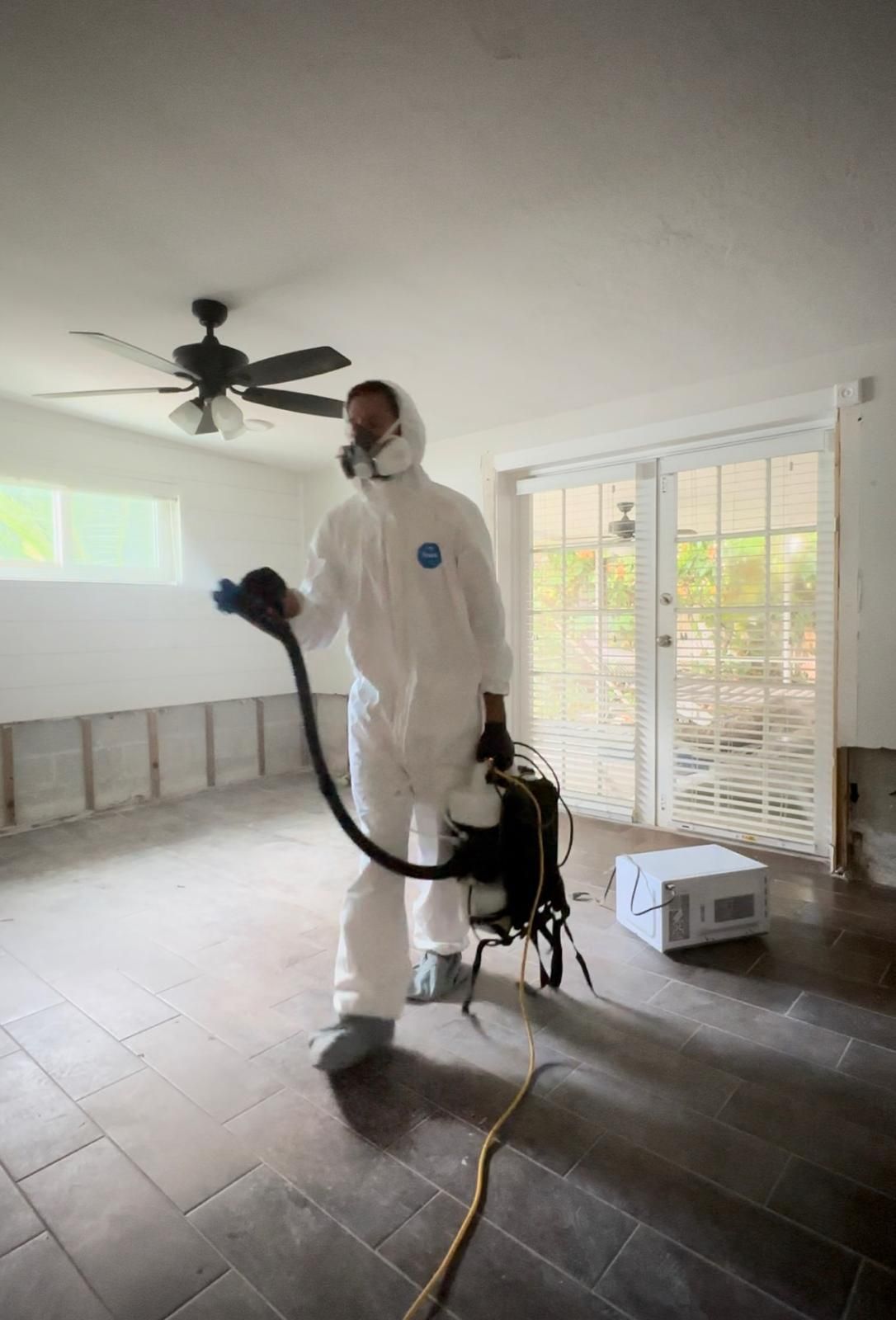
The smartest move is to test before you remediate. Knowing the type and extent of mold in your home lets you address the actual problem instead of guessing, and it gives you a documented starting point. If the results show active mold that needs to be removed, remediation follows a defined process of containment, HEPA filtration, antimicrobial treatment, and drying, all performed to ANSI/IICRC S520 standards.
One advantage of working with a fully licensed Florida company is that the same team can guide you from testing through remediation and final clearance, so nothing falls through the cracks. Spora holds Florida Mold Assessor license MRSA5106, Mold Remediator license MRSR5152, and Home Inspector license HI17960, and our process follows EPA guidelines from start to finish.
5. Why St. Pete Homeowners Call a Local, Licensed Team
When it comes to your home and your family's air, local matters. Spora Mold Remediation is family owned and based right here at 6944 Grande Vista Way S in South Pasadena, minutes from anywhere in St. Petersburg. We know the neighborhoods, the housing stock, and the way Tampa Bay's climate behaves, because we live and work here too.
Homeowners across Pinellas County trust us with a 4.9 star rating across more than 100 reviews, and we work directly with insurance adjusters when water damage is involved. From a single air quality test to a complete remediation, you get licensed, insured professionals and clear, lab backed answers, not guesswork.
Ready to Find Out What Is Really in Your Air?
If your St. Petersburg home has a musty smell, a history of leaks, or you simply want peace of mind, professional mold testing gives you the facts. Same day inspections are often available, and lab results typically come back within 24 to 48 hours.
Call Spora Mold Remediation today at (727) 618-6653 for a free phone consultation, and let your local, licensed Pinellas team help you breathe easier.